
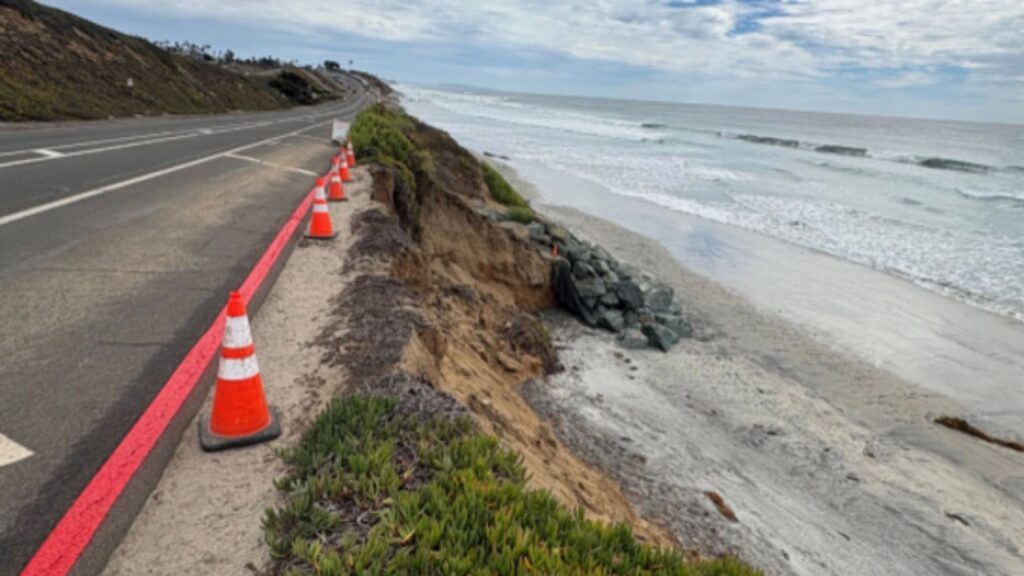
Sacramento, California — California has declared a statewide state of emergency as forecasters warn that an intensifying El Niño could become one of the strongest events ever recorded, prompting officials to mobilize resources before potentially dangerous winter storms arrive.
Gov. Gavin Newsom announced the emergency proclamation Monday, Sept. 21, saying the state is taking action ahead of possible flooding, landslides, coastal flooding and other severe weather impacts. State officials are preparing roads, critical infrastructure, emergency supplies and response equipment before the strongest storms develop.
The National Oceanic and Atmospheric Administration has also reported that El Niño is strengthening, with a greater than 90% chance of a very strong event during the Northern Hemisphere fall and winter of 2026-27.
California Moves Early to Prepare for Storms
The emergency proclamation allows state agencies to accelerate preparations for communities that could be vulnerable to severe winter weather.
Officials will focus on reducing flood risks, preparing for landslides and debris flows, protecting critical infrastructure and staging emergency equipment ahead of major storms.
The state’s flood response preparations include positioning supplies such as sandbags and pumps. Caltrans will also stage traffic-control equipment, road-closure resources and snow-removal equipment along highways considered most vulnerable to severe winter conditions.
The proclamation also prepares the California National Guard to assist with flood response, search-and-rescue operations, engineering and logistics missions if those resources become necessary.
State environmental and natural resources agencies are being directed to help local governments prepare for flooding, landslides and debris flows while working to speed up permitting for emergency projects.
Officials Say They Are Not Waiting for the Storms
California Office of Emergency Services Director Caroline Thomas Jacobs said officials are taking action before the weather becomes dangerous.
“We’re not waiting for this season’s storms to be on our doorstep,” Jacobs said in the governor’s announcement.
She said early planning and coordination are intended to ensure communities and first responders have the personnel, equipment and support needed to respond when conditions change.
The state is also expanding public preparedness communications covering severe weather, flooding, emergency alerts, evacuation readiness and power outages.
The goal is to have equipment and personnel positioned before severe weather creates transportation problems or makes it more difficult for emergency crews to reach affected communities.
What Could El Niño Mean for California?
El Niño is a naturally occurring climate pattern involving warmer-than-average ocean temperatures in the tropical eastern and central Pacific. The warming can alter atmospheric circulation and influence storm tracks across the United States.
For California, strong El Niño events can bring more frequent and intense winter storms, increasing the potential for heavy rain, flooding, landslides, debris flows, coastal flooding and erosion.
The current event is already unusually strong. NOAA’s latest September assessment said sea-surface temperature anomalies in the eastern equatorial Pacific had exceeded 3 degrees Celsius, while the agency forecast a greater than 90% chance of a very strong El Niño during the fall and winter.
Officials caution that the exact impacts will vary by location and individual storm.
Days of Dangerous Surf and Coastal Flooding Are Coming as a Major Nor’easter Takes Shape
El Niño Can Affect More Than the Weather
The climate pattern also affects the Pacific Ocean itself.
Under normal conditions, trade winds push warm surface water westward toward Asia while colder, nutrient-rich water rises from deeper levels near the eastern Pacific. This process, known as upwelling, supports marine ecosystems.
During El Niño, those trade winds weaken and warm water shifts eastward. Upwelling can weaken or stop, reducing the amount of nutrients reaching surface waters and affecting phytoplankton, fish and other marine life.
El Niño and La Niña typically last nine to 12 months, although individual events can last longer. They generally occur every two to seven years, but not on a fixed schedule.
California Urges Residents to Prepare Now
The state’s emergency declaration comes before the most potentially disruptive weather arrives, giving agencies time to position resources and coordinate with local communities.
State officials are urging residents to take preparedness seriously by knowing their flood risk, clearing drains and gutters, signing up for emergency alerts and having a plan before severe weather arrives.
With El Niño expected to strengthen through the coming months, California could face repeated rounds of heavy rain and mountain snow, along with the possibility of flooding, landslides and coastal impacts.
Are you in California, and are you preparing for the potentially powerful El Niño season? Share your city and your concerns in the comments below.







One thought on “Statewide Emergency Declared in California as Powerful El Niño Threatens Flooding and Landslides”