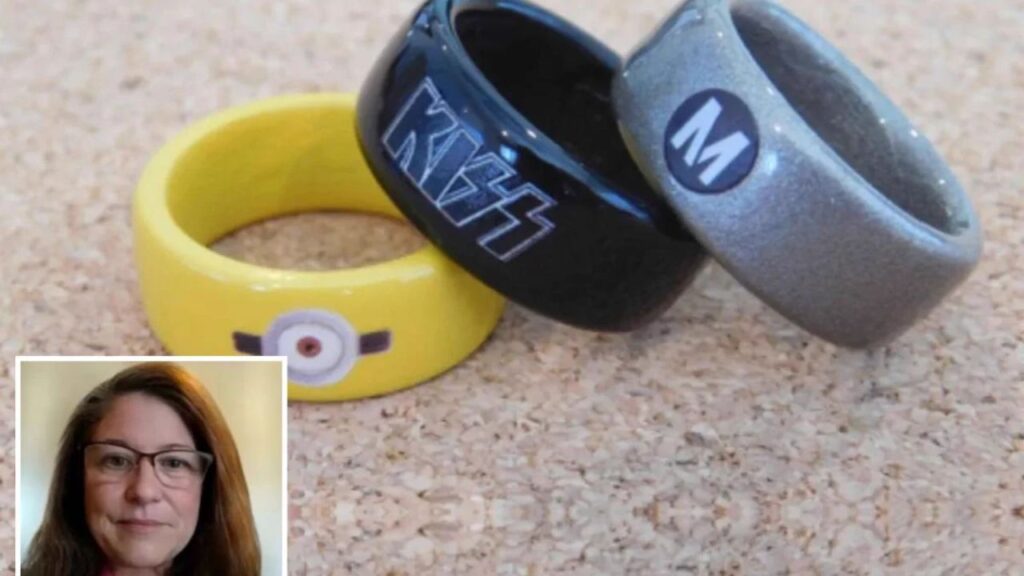
Los Angeles, California — A California technology executive has been convicted after prosecutors said she defrauded investors out of nearly $2 million through a scheme involving smart payment rings, fabricated business claims and a fraudulent pandemic-relief loan.
Michelle Bisnoff, the CEO of Esos Rings Inc., was accused of using false claims about her company’s business relationships and intellectual property to persuade investors to provide money. According to the U.S. Attorney’s Office, the scheme began in 2017 and continued as Bisnoff allegedly portrayed the company as a rapidly growing wearable-tech business with major opportunities ahead.
Her sentencing is now scheduled for Jan. 21, 2027, after her conviction on multiple fraud, money laundering and aggravated identity theft charges.
CEO Allegedly Claimed Ownership of Patented Ring Technology
Prosecutors said Bisnoff falsely claimed ownership of patented near-field communication (NFC) payment-ring technology that actually belonged to McLear Ltd., a company based in the United Kingdom.
McLear had hired Bisnoff to help develop its business in the U.S. market. Authorities said Bisnoff nevertheless used claims about the technology while seeking money from investors for Esos Rings.
She allegedly told potential investors that their money would be used to increase manufacturing and build inventory in anticipation of strong demand from major retailers.
Among the retailers she referenced were Target and Walmart, according to prosecutors. But investigators found that the reality was dramatically different.
Esos Had Little Revenue and Minimal Walmart Sales
According to prosecutors, Esos had no agreement with Target and had generated very little revenue.
The company’s relationship with Walmart was also far smaller than investors were allegedly led to believe. Authorities said Esos had sold only six rings through Walmart, with three of those purchases later returned by customers.
Bisnoff also allegedly told investors that Apple and Roc Nation were investing in Esos, despite the company having no agreements with either organization.
Those claims helped create the appearance of a business backed by major corporate names and positioned for significant growth. When promised returns failed to materialize, however, investors began demanding answers.
Investor Described Her Explanations as “Dog-Ate-My-Homework”
During Bisnoff’s seven-day trial, one investor described the explanations she allegedly provided after failing to deliver promised returns as “dog-ate-my-homework” excuses.
Prosecutors said Bisnoff eventually attempted to obtain approximately $550,000 from an employer in an effort to repay investors. The checks allegedly bounced.
Overall, authorities said the scheme resulted in nearly $2 million being taken from investors, with approximately $1.4 million in direct losses.
The case involved more than simply false business claims, prosecutors said, as Bisnoff also became involved in an alleged attempt to improperly obtain federal pandemic assistance.
$150,000 COVID Relief Loan Was Also Fraudulently Obtained
In March 2020, during the height of the COVID-19 pandemic, Bisnoff allegedly applied for federal assistance through the Economic Injury Disaster Loan program.
She ultimately received a $150,000 loan, according to prosecutors.
Authorities said she then used part of the money for personal expenses, including a $15,600 monthly rent payment for a leased home in Pacific Palisades.
The alleged misuse of the relief funds became another part of the federal case against her.
Central Park’s Beloved Bird Artist Was Found Dead in a Gazebo—Now a Suspect Is Facing Murder Charges
SEC Previously Sued Bisnoff and Esos
The federal criminal case followed an earlier civil enforcement action.
In 2023, the Securities and Exchange Commission sued Bisnoff and Esos, alleging that investors had been defrauded of approximately $1.95 million.
Later that year, a court ordered Bisnoff and the company to pay more than $836,000 within 20 days. According to court records cited in the case, however, neither Bisnoff nor Esos had repaid any of that amount.
The latest conviction now puts the former CEO at risk of a substantial federal prison sentence.
Fraud Charges Could Carry Decades in Prison
U.S. District Judge Mónica Ramírez Almadani has scheduled Bisnoff’s sentencing hearing for Jan. 21, 2027.
Each securities-fraud and wire-fraud count carries a statutory maximum sentence of up to 20 years in federal prison, while each money-laundering count carries a maximum of up to 10 years.
The aggravated identity-theft convictions carry an additional mandatory two-year federal prison sentence, which must be served consecutively to any other prison term imposed.
The eventual sentence will be determined by the court at the scheduled hearing.
What do you think about the allegations surrounding this unusual smart-ring investment scheme? Share your thoughts in the comments and let us know which part of the case surprised you the most.