
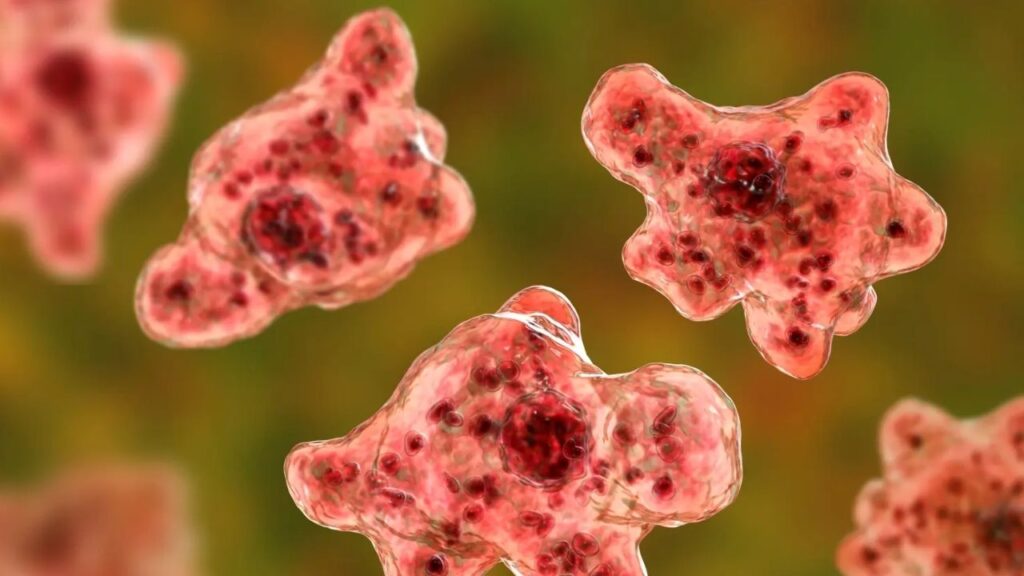
NORTH CAROLINA — A North Carolina family is mourning the death of a teenager who developed a rare and often deadly infection caused by Naegleria fowleri, an organism commonly found in warm freshwater.
Moises Ponce Mendoza died Monday after becoming critically ill with primary amebic meningoencephalitis, a rare infection caused when Naegleria fowleri enters the body through the nose and reaches the brain.
The North Carolina Department of Health and Human Services confirmed that Mendoza had been critically ill and receiving medical treatment before his death.
“We extend our condolences to the family, friends and community impacted by this loss,” the department said in a statement.
The tragic case has drawn renewed attention to the rare organism, particularly during the summer months when freshwater temperatures can rise.
Teen’s Condition Worsened Rapidly
Mendoza’s family said his illness initially appeared with what seemed like severe headaches. His mother, Monica Mendoza, described her son in a GoFundMe fundraiser as a young man full of life who was fighting for his life in the hospital.
“It all started with severe headaches. I never imagined that something like this could be so serious,” she wrote in Spanish, according to a translated version of the fundraiser.
Monica said she initially took her son to a hospital in Burlington, where the family was reportedly told he could return home. But his condition soon became much worse.
By Saturday morning, Mendoza had to be rushed to the emergency room at the University of North Carolina hospital. It was there that doctors determined he had contracted an infection caused by the extremely rare amoeba.
“From that moment on, our lives changed completely,” Monica wrote.
She said her son was in a coma while doctors worked to treat the infection and give him a chance to survive.
Despite those efforts, Mendoza died Monday.
What Is the ‘Brain-Eating Amoeba’?
Naegleria fowleri is a microscopic, single-celled organism that can be found in warm freshwater environments, including lakes and rivers.
It is often referred to as the “brain-eating amoeba” because, in extremely rare cases, the organism can travel through the nose to the brain and destroy brain tissue.
The resulting infection is known as primary amebic meningoencephalitis, or PAM.
According to health officials, infections most often occur after a person swims or spends time in warm freshwater. The organism does not cause infection simply by swallowing contaminated water.
PAM is extremely uncommon but can progress very quickly.
Early symptoms can include severe headache, fever, nausea and vomiting. As the infection advances, patients may develop a stiff neck, seizures, confusion, coma and other severe neurological symptoms.
The illness is frequently fatal, with patients often becoming critically ill within days of the first symptoms.
Health Officials Investigate Source of Infection
The North Carolina health department said the source of Mendoza’s infection remains under investigation. Officials have not publicly identified the specific freshwater location believed to be connected to the case.
Health authorities emphasize that infections involving Naegleria fowleri are extraordinarily rare. Typically, fewer than 10 people in the United States develop PAM each year.
However, the organism is more likely to be present in warm freshwater during periods of high temperatures, making summer a particularly important time for awareness.
The rarity of the infection means that public health officials generally focus on understanding where exposure occurred and providing information about ways to reduce potential risk.
Another Child Recently Died From Rare Infection
Mendoza’s death comes shortly after another tragic case involving Naegleria fowleri.
Lillian Smart, 8, died more than a week earlier after developing an infection linked to the brain-eating amoeba following freshwater swimming in a northern Louisiana lake.
The two deaths have highlighted the devastating consequences that can occur when the rare organism enters the body. For Mendoza’s family, however, the statistics offer little comfort.
A teenager who began with severe headaches and was soon fighting for his life in a hospital has now died, leaving his loved ones grieving and searching for answers.
The health department’s investigation into the source of the infection remains ongoing.
Have you ever heard of the “brain-eating amoeba” before this case? Share your thoughts or experiences in the comments.









One thought on “North Carolina Teen’s Sudden Death From Rare ‘Brain-Eating Amoeba’ Leaves Family Heartbroken After Rapid Illness”