
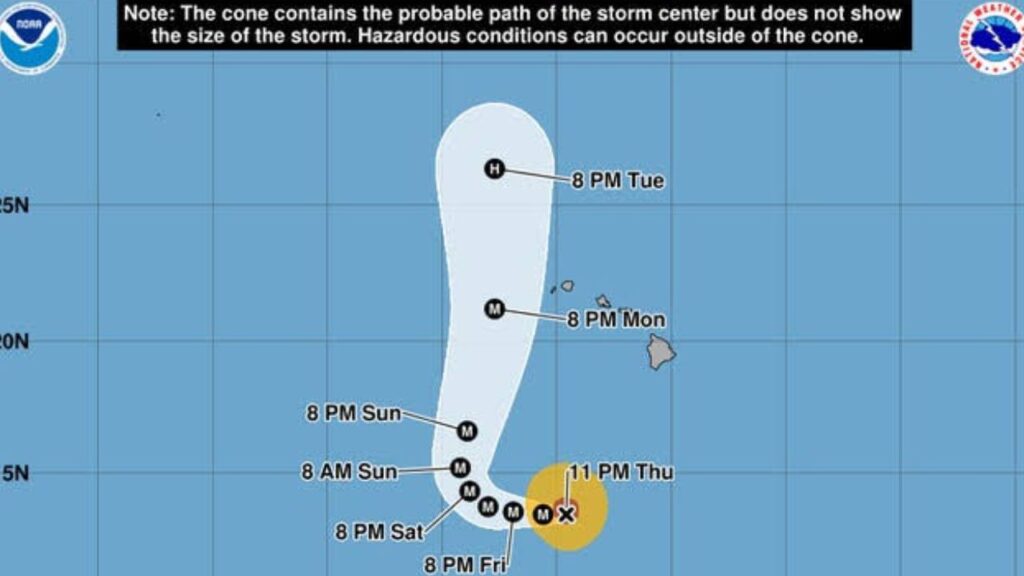
HONOLULU, Hawaii — Hawaii residents are keeping a close eye on Hurricane Lowell as the powerful storm moves across the Central Pacific and approaches the broader area of the Hawaiian Islands.
The National Hurricane Center and Central Pacific Hurricane Center are urging interests in Hawaii to continue monitoring Lowell, as the storm’s forecast track could bring it close to portions of the island chain.
The immediate concern is not necessarily that Lowell will make a direct landfall. Instead, forecasters are watching how close the hurricane could pass to the islands and what impacts its large wind field and ocean swells could produce.
The forecast remains subject to change, particularly because tropical systems can shift considerably as atmospheric conditions evolve.
Lowell Remains a Powerful Major Hurricane
As of the latest National Hurricane Center advisory, Lowell was moving generally westward at about 9 mph, with maximum sustained winds around 125 mph and stronger gusts.
Those winds place Lowell in the Category 3 major hurricane range.
The storm has already experienced fluctuations in strength. Earlier in the week, Lowell briefly reached Category 5 intensity, with winds reported near 160 mph, before weakening.
Forecasters still expect some changes in intensity during the coming days, but the hurricane is expected to remain a significant tropical system as it approaches the region.
That means residents should not assume that an offshore track automatically means there will be no impacts.
Latest Forecast Track Takes Lowell West of Hawaii
The latest forecast calls for Lowell to gradually change direction, turning toward the northwest and eventually north over the weekend.
That projected movement could take the hurricane near or just west of Hawaii’s westernmost main islands late Sept. 7 and into early Sept. 8.
The forecast track represents the most likely path of the storm’s center, but it does not show the full size of the hurricane or all potential impacts.
That distinction is especially important because the center of a tropical cyclone can travel outside the forecast cone, and dangerous conditions can extend well away from the center.
For that reason, officials are encouraging people throughout the Hawaiian Islands to keep checking updated forecasts rather than focusing only on the current projected center line.
Kauai Could Be Closest to the Forecast Track
Among the main Hawaiian Islands, Kauai is currently an important focus of the forecast, as the projected path takes Lowell toward the western part of the island chain.
Kauai has experienced devastating hurricanes before, including Hurricane Iniki in 1992, one of the most destructive hurricanes in Hawaii’s history.
However, the current forecast does not establish that Lowell will make landfall on Kauai or any other Hawaiian island. Instead, forecasters are emphasizing uncertainty and the need for continued monitoring as the storm’s track develops.
Even relatively small changes in Lowell’s direction or speed could alter which islands experience the strongest conditions.
Dangerous Surf and Rip Currents Could Arrive First
Hawaii does not have to experience a direct hurricane strike to feel the effects of Lowell.
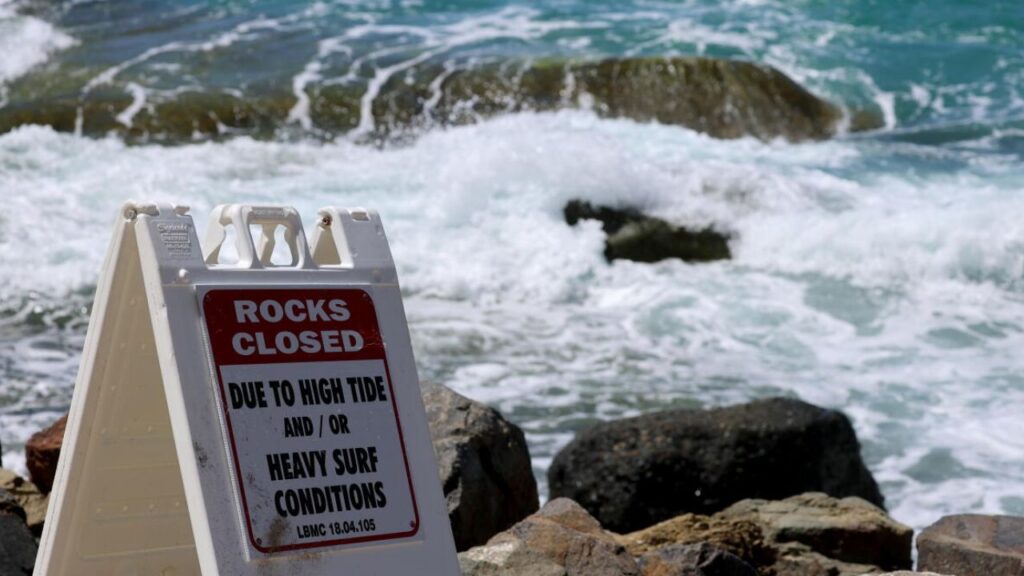
The National Hurricane Center warns that swells generated by the storm are likely to produce life-threatening surf and rip-current conditions across many Hawaiian Islands during the coming days.
That means beaches and coastal waters could become dangerous even while Lowell remains offshore. Residents and visitors should pay close attention to local beach and ocean safety guidance, particularly if conditions begin deteriorating.
The hurricane’s large swells can travel far from the center of the storm, making ocean conditions an important concern before any potential approach.
Hawaii Residents Urged to Keep Watching the Forecast
For now, the biggest message from forecasters is not to panic but to stay informed.
The current forecast suggests Lowell could pass near or west of the Hawaiian Islands rather than directly crossing the state, but officials continue to acknowledge uncertainty about the eventual track and intensity.
Residents should continue following updates from the National Hurricane Center and local Hawaii weather officials, especially as the storm approaches the islands over the weekend.
The forecast could change, and additional advisories will provide a clearer picture of Lowell’s potential impacts.
Do you think Hawaii should be preparing for Hurricane Lowell now, or is it still too early to tell? Share your thoughts in the comments.








One thought on “Hurricane Lowell Could Near Hawaii Next Week—Here’s What the Latest Track Shows”