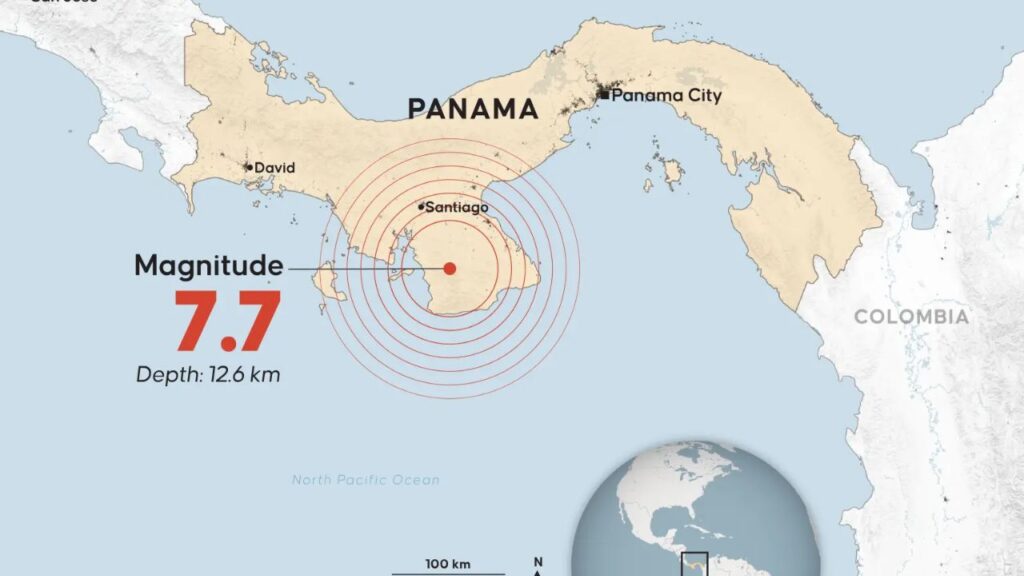
Panama — A powerful magnitude 7.7 earthquake struck southern Panama, prompting tsunami threats across parts of Central and South America and raising concerns about possible coastal impacts. California officials moved quickly to reassure residents Friday, saying the earthquake was not expected to generate a tsunami along the state’s coastline.
The National Weather Service’s Los Angeles office confirmed that California was not expected to face a tsunami threat from the earthquake. The statement came as residents followed developments from Panama and other areas identified in tsunami advisories.
The earthquake also drew attention to Southern California’s already dangerous coastal conditions, where powerful surf and flooding have damaged sections of the shoreline.
California Officials Issue Tsunami Reassurance After Panama Earthquake
California residents concerned about the possibility of tsunami waves received a direct message from weather officials following the earthquake.
“A tsunami is NOT expected for California from the recent large earthquake in Panama,” the National Weather Service’s Los Angeles office said in a social media post.
A tsunami is NOT expected for California from the recent large earthquake in Panama. #cawx https://t.co/K1w4MydJiF
— NWS Los Angeles (@NWSLosAngeles) October 9, 2026
The announcement was intended to distinguish California’s situation from the potential tsunami threats identified for other countries closer to the earthquake.
Although powerful earthquakes beneath or near the ocean can displace large volumes of water and generate tsunami waves, the effects depend on the earthquake’s location, depth, and other geological factors.
Officials specifically said a tsunami was not expected in California from this Panama earthquake. That assessment did not mean every coastal area was free from hazards, particularly given the dangerous surf conditions already affecting parts of Southern California.
Tsunami Threats Identified Across Central and South America
The U.S. Tsunami Warning System identified potential tsunami threats for several countries following the powerful earthquake. The areas listed included Costa Rica, El Salvador, Peru, Mexico, Guatemala, Panama, Nicaragua, Colombia and Ecuador.
The alerts highlighted the potential for tsunami impacts across portions of the Pacific coast of Central and South America. However, the identification of a potential threat does not mean that destructive waves will necessarily reach every location listed.
Tsunami alerts and assessments can change as monitoring agencies evaluate seismic data, ocean observations and the potential movement of waves.
Residents in affected coastal areas should follow instructions from local emergency management agencies and official tsunami monitoring authorities rather than relying on unverified social media reports.
Where the Powerful Earthquake Struck in Panama
According to the U.S. Geological Survey, the earthquake struck approximately 9 miles southwest of Pitaloza Arriba, a remote community near Panama’s southern tip.
The magnitude 7.7 event was powerful enough to draw widespread attention and trigger tsunami-related assessments across the region.
Tremors were felt in Panama City, where buildings shook and residents reportedly evacuated into the streets while waiting for information about the earthquake’s impact.
The immediate consequences of a major earthquake can vary considerably between remote communities near the epicenter and larger cities farther away. Building conditions, local geology and the strength of the shaking can all influence the extent of damage.
Information about casualties, structural damage and the full impact of the earthquake would depend on subsequent assessments by local authorities and emergency responders.
Southern California Faces Dangerous Surf and Coastal Flooding
While officials sought to ease tsunami concerns linked to the Panama earthquake, Southern California was already dealing with a separate coastal hazard.
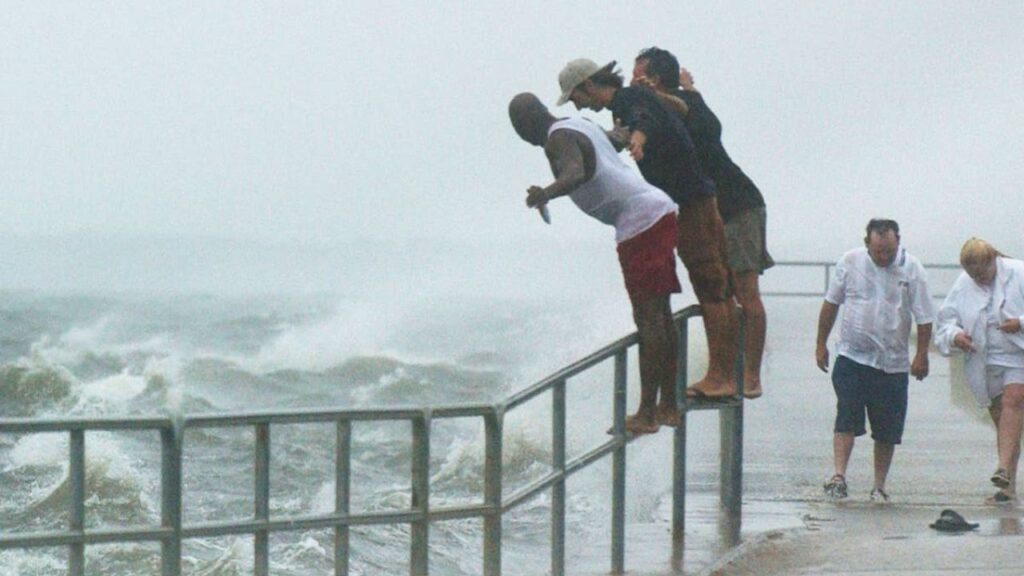
Powerful waves associated with former Hurricane Rachel had battered sections of the coastline, creating dangerous conditions along exposed beaches and waterfront properties.
The reported damage included the collapse of sections of the Long Beach Peninsula boardwalk on Friday. One oceanfront home was also described as being on the verge of falling into the surf.
These conditions illustrate why California’s immediate coastal risks cannot be assessed solely by looking at tsunami alerts. Large waves, coastal erosion, flooding and unstable structures can create serious dangers even when no earthquake-related tsunami is expected.
People visiting beaches or living near vulnerable waterfront areas should pay attention to local warnings, avoid damaged boardwalks and stay away from eroding cliffs or structures threatened by waves.
What California Residents Should Know Now
The main message from California weather officials was clear: the magnitude 7.7 earthquake in Panama was not expected to produce a tsunami in California.
However, residents should continue monitoring official weather updates because hazardous surf and coastal flooding can pose independent risks.
Anyone near the shoreline should avoid entering the water during dangerous surf conditions and follow evacuation or access restrictions issued by local authorities. Residents should also avoid approaching damaged coastal structures to take photographs or assess the damage themselves.
The Panama earthquake prompted significant regional concern, but the tsunami assessment for California was reassuring. The separate threat from powerful ocean waves remains an important consideration for communities along the Southern California coast.
Are you following the latest developments from Panama and Southern California? Share your thoughts in the comments below.